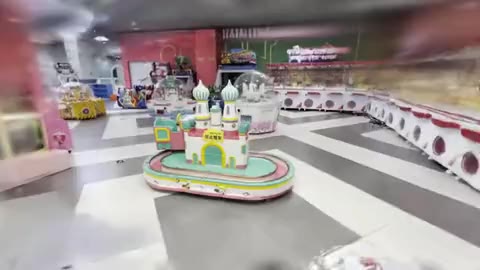
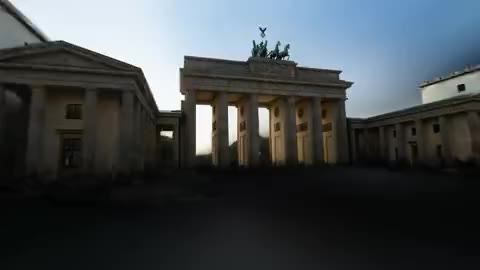
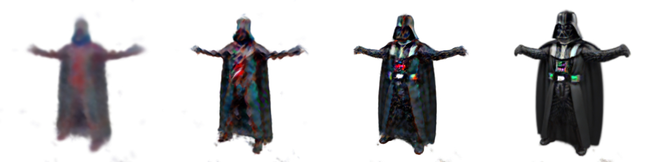
R³: 3D Reconstruction via Relative Regression
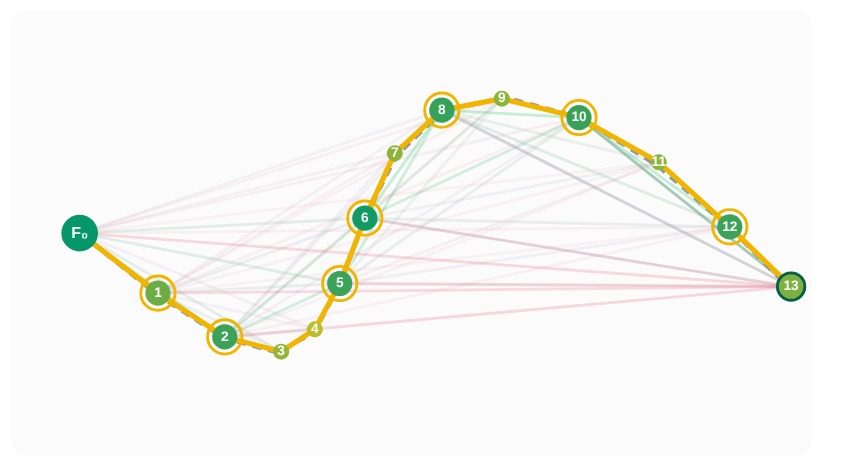
Confidence-weighted relative poses assembled into trajectories — robust, low-memory streaming and offline 3D reconstruction, matching 1B baselines with a 0.3B model.
MS Student in ECE
University of Michigan, Ann Arbor
I work on 3D reconstruction, diffusion models, and 3D/4D perception — currently focused on the representations underneath, latent or explicit. I work closely with Prof. Jun Gao.
This summer, I'm interning under Prof. Qianqian Wang at the Kempner Institute and SEAS, Harvard University.
Before UMich, I was a visiting student at Westlake University, where I was fortunate to be advised by Anpei Chen and Yuliang Xiu. I received my bachelor's degree from ShanghaiTech University, with a year as a visiting student at UC Berkeley, where I joined the nerfstudio team, built Splatfacto-W, and was fortunate to be guided by Angjoo Kanazawa.
Besides research, I enjoy photography, playing the guitar, composing, traveling, and cooking.
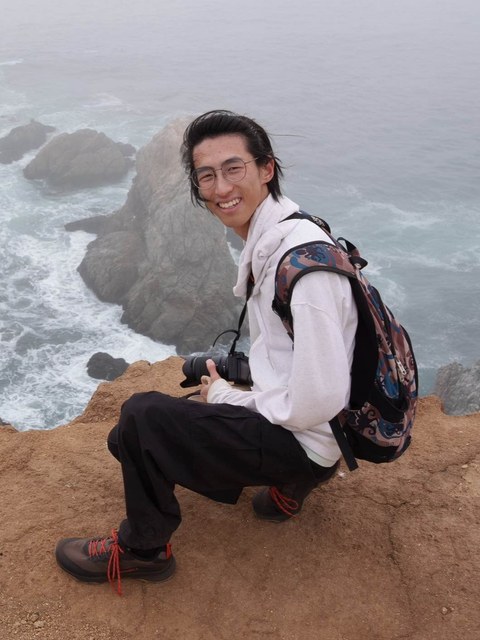
one of the images is me
* denotes equal contribution. See Google Scholar for the full list.
Confidence-weighted relative poses assembled into trajectories — robust, low-memory streaming and offline 3D reconstruction, matching 1B baselines with a 0.3B model.
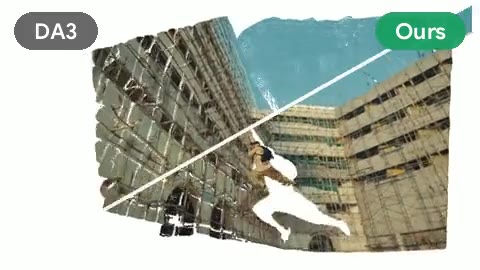
Pixel-perfect multiview depth estimation that works across different backbones, largely eliminates flying points, and adds negligible overhead.
Bridges the conditioning gap between 3D reconstruction and generation with a video diffusion model that recurrently repairs and densifies reconstructed scenes.
Real-time Gaussian splatting for in-the-wild photo collections, handling appearance variation and transient occluders — shipped in nerfstudio.
Team member and maintainer of the modular framework for NeRF and Gaussian splatting research — bug fixes, PR reviews, and features including bilateral-grid appearance modeling and Splatfacto-W.
Code →
-webui
A web UI I built for nerfstudio — configure, train, and monitor NeRF / Gaussian splatting models from the browser, no command line required.
Code →
Pose-controllable text-to-3D character generation — integrates ControlNet and LoRA into the DreamGaussian pipeline for multi-view-consistent 3D characters.
The best way to reach me is by email: xucr@umich.edu. I'm always happy to chat about 3D vision, generative models, or open-source tooling.